## Introduction: The Looming Shadow of AI on Employee Benefits
In the complex landscape of employee benefits, facing an ERISA claim denial can feel like an insurmountable challenge, especially as we navigate the evolving complexities of 2026. The Employee Retirement Income Security Act (ERISA) was designed to protect individuals in private-sector employee benefit plans, yet its intricate framework often leaves beneficiaries feeling powerless against well-resourced insurance companies and plan administrators. The role of an ERISA claim denial lawyer has always been critical, acting as a crucial advocate. However, the current era introduces a new and formidable adversary: Agentic AI. This advanced form of artificial intelligence is now being deployed in claims processing, creating an unprecedented ‘Agentic AI’ claim denial crisis. These sophisticated algorithms are streamlining operations for insurers but are also, in some cases, automating rejections with alarming efficiency and a notable lack of human oversight. This pillar content report delves into the profound impact of these technological shifts, offering essential strategies for beneficiaries and their legal representatives to effectively challenge and shatter unjust denials.
## Understanding ERISA and the Rise of Agentic AI Denials
ERISA sets minimum standards for most voluntarily established retirement and health plans in private industry to provide protection for individuals in these plans. When a claim is denied, it can impact crucial financial security or access to healthcare. Historically, denials stemmed from misinterpretations of plan documents, administrative errors, or subjective judgments by human adjusters. The landscape, however, is dramatically shifting. In 2026, the widespread adoption of “Agentic AI” in insurance claims processing marks a pivotal moment. Agentic AI refers to AI systems that can independently take actions to achieve a goal, moving beyond mere data analysis to making decisions and executing tasks, including claim assessments and denials.
Insurance companies are increasingly investing in AI to enhance efficiency, reduce costs, and expedite decision-making across various operations, including claims management. The AI in insurance claims processing market is projected to grow significantly, with AI tools becoming core capabilities rather than isolated experiments. While these technologies promise improved accuracy and faster processing, they also introduce significant legal and ethical risks, particularly when used to make sensitive decisions like claims approvals and denials. Insurers are deploying AI to screen claims for inconsistencies, risk markers, and timing patterns, which can lead to denials or prolonged investigations. This means that what once required human deliberation can now be processed in mere seconds by an algorithm, sometimes with inadequate transparency and without meaningful human review.
## Navigating the 2026 ‘Agentic AI’ Claim Denial Crisis
The year 2026 is witnessing an intensification of the ‘Agentic AI’ claim denial crisis. Insurers are scaling AI into production to enable automated, real-time claims ecosystems. Reports indicate that some insurance companies have used algorithms to deny hundreds of thousands of claims within short periods, with a high percentage of these denials being overturned on appeal, suggesting algorithmic errors or a lack of proper human oversight. This surge in automated denials highlights a critical challenge for beneficiaries: understanding *why* their claim was rejected when the decision-making process is largely opaque and driven by complex algorithms, or “black boxes”.
For someone facing an ERISA claim denial lawyer’s challenge due to AI, the stakes are exceptionally high. These denials can have devastating consequences, impacting access to necessary medical care or vital retirement funds. The core issue is that AI systems, while efficient, may lack the judgment, legal reasoning, and human context required for fair claim adjudication. Algorithms are trained on historical data, which can inadvertently perpetuate biases or misinterpret unique circumstances, leading to discriminatory or incorrect outcomes. Furthermore, insurers often claim their algorithms are proprietary, hindering transparency and accountability.
## The Regulatory Quagmire: Shifts and Challenges
The rapid adoption of Agentic AI in insurance has outpaced the development of comprehensive regulatory frameworks, creating a significant quagmire for beneficiaries seeking an ERISA claim denial lawyer’s help. Federal and state regulators are now grappling with how to oversee AI use in financial services, including insurance.
### State-Level Initiatives and Federal Scrutiny
Some states are beginning to respond to the growing concerns. California, for instance, has instituted legislative action (SB 1120) that mandates denials or modifications of healthcare services based on medical necessity must be made by a licensed physician or qualified healthcare professional, explicitly prohibiting AI or algorithms as the sole basis for such determinations. This legislation requires human substantive review and ensures AI determinations are based on the insured’s specific healthcare information, not just aggregated datasets. Other states, including Texas, are also exploring legislative measures, while 22 states currently lack regulations for AI in underwriting.
Federally, the Biden administration has issued executive orders and guidance emphasizing transparency, explainability, and human oversight in AI systems. The Department of Labor’s Employee Benefits Security Administration (EBSA) has confirmed that its cybersecurity guidance applies to all employee benefit plans, and ERISA fiduciaries are expected to ensure plan decisions are made “solely in the interest of participants and beneficiaries” with prudence and diligence. Delegating critical claim denials to opaque AI models without adequate human oversight risks violating these fiduciary duties. The U.S. Government Accountability Office (GAO) has highlighted the benefits and risks of AI in financial services, noting that while AI can improve efficiency, it also poses risks like biased lending decisions and privacy concerns.
### Ethical Imperatives and the Call for Transparency
Beyond legal mandates, there’s a strong ethical imperative for responsible AI deployment in insurance. Concerns about algorithmic bias, lack of transparency, and accountability are at the forefront. If an AI system assigns higher premiums or denies claims based on factors correlated with protected characteristics, it perpetuates unfair treatment. The American Medical Association (AMA) has expressed significant concerns, with nearly half of all physicians prioritizing regulatory action regarding payers’ use of AI in medical necessity determinations.
Regulators are increasingly signaling that existing rules for supervision, recordkeeping, data privacy, and marketing still apply to AI tools. This includes ensuring that AI outputs are supervised and that client data is handled with appropriate safeguards. The challenge lies in mapping these emerging technologies to long-standing legal obligations and doing so transparently. Building trust in AI-driven claims handling requires robust governance practices, including data audits, bias detection, and clear accountability mechanisms.
## 5 Essential Strategies an ERISA Claim Denial Lawyer Employs
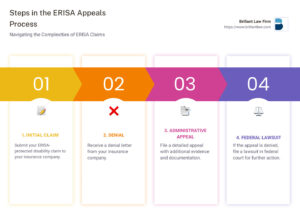
When confronting the complexities of an Agentic AI-driven ERISA claim denial, an experienced ERISA claim denial lawyer utilizes a multifaceted approach to safeguard beneficiary rights.
### Strategy 1: Meticulous Review and Data Scrutiny
The first, and perhaps most crucial, step for an ERISA claim denial lawyer is to conduct an exhaustive review of all plan documents, the denial letter, and any underlying data or reasoning provided by the insurer. In the age of AI, this also means probing for evidence of algorithmic decision-making. Attorneys will meticulously analyze the specific language of the denial, looking for vague explanations or reliance on “data-driven reasoning” that doesn’t cite clear policy language. They will assess if the denial process followed ERISA’s procedural requirements, which are often strict. This deep dive aims to uncover any discrepancies, errors in data input, or misinterpretations by the AI system. Given that AI systems are often trained on vast datasets, identifying if a denial is based on flawed or biased data is paramount.
### Strategy 2: Asserting Human Oversight and Fiduciary Duty
A key vulnerability for insurers in the AI era is the lack of meaningful human oversight in automated denial processes. An ERISA claim denial lawyer will strongly argue that purely algorithmic denials, particularly those without a substantive review by a qualified human professional, violate ERISA’s core fiduciary duties. ERISA fiduciaries have a legal obligation to act “solely in the interest of participants and beneficiaries” with prudence and diligence. Delegating critical claim decisions solely to opaque AI models risks breaching this duty. Attorneys will emphasize the legal principle that technology should amplify, not replace, human judgment, especially in decisions that significantly impact a beneficiary’s life. They will demand proof of human involvement at critical stages, pushing back against the notion that AI can make final decisions without accountability.
### Strategy 3: Leveraging Legal Precedent and Emerging Regulations
The legal landscape surrounding AI in insurance is rapidly evolving. An ERISA claim denial lawyer stays abreast of new court decisions, state legislation, and federal guidance that can be leveraged to challenge AI-driven denials. For instance, attorneys can cite state laws, like California’s SB 1120, that prohibit AI from being the sole basis for medical necessity denials. They will also refer to federal efforts that underscore the importance of transparency and accountability in AI systems, such as the White House executive order on AI. Additionally, they can draw on existing consumer protection laws, like the Equal Credit Opportunity Act (ECOA), which prohibits discrimination, and argue that biased AI algorithms in claim processing can lead to analogous discriminatory impacts. The focus will be on demonstrating that life insurance is governed by contract law, not merely predictive analytics, and insurers must prove a specific exclusion applies, not just automated suspicion.
### Strategy 4: Strategic Appeals and Litigation
When an initial internal appeal is denied, an ERISA claim denial lawyer will guide beneficiaries through the external appeal process, preparing robust arguments that directly confront the AI-driven rationale. They can assist in gathering additional medical evidence, expert opinions, and compelling narratives that highlight the human impact of the denial, factors that AI systems often fail to adequately consider. If appeals fail, litigation becomes the next course of action. ERISA class actions are growing, and legal intelligence tools, which themselves can use AI, are making it easier to detect ERISA violations at scale, helping attorneys build robust cases. Attorneys will seek discovery into the AI models used, challenging their accuracy, fairness, and the extent of human review. They will argue that wrongful denials based on algorithmic errors should be overturned, especially given that many AI-driven denials have a high reversal rate on appeal.
### Strategy 5: Advocating for Comprehensive Policy Reform
Beyond individual cases, an ERISA claim denial lawyer also plays a vital role in advocating for broader policy reform. They contribute to the ongoing dialogue with regulators and policymakers, sharing insights from client experiences to highlight the systemic flaws of unchecked Agentic AI in claims processing. This can involve supporting initiatives for stricter disclosure requirements, mandatory human review thresholds, and independent auditing of AI algorithms used by insurers. By bringing these issues to the forefront, they contribute to shaping a regulatory environment where AI serves as a tool for efficiency and fairness, rather than a barrier to rightful benefits. They will also point to the need for clear audit trails and transparency to build trust with regulators, customers, and employees alike.
## Why Your Choice of an ERISA Claim Denial Lawyer Matters
In this rapidly evolving environment, the expertise of an ERISA claim denial lawyer is more critical than ever. The technical nature of Agentic AI, coupled with the intricate legal requirements of ERISA, demands a legal professional who not only understands the law but also grasps the implications of advanced technology. These lawyers are equipped to challenge sophisticated algorithmic denials, uncover hidden biases, and navigate the complex interplay between technology and legal precedent. Their specialized knowledge allows them to articulate arguments that resonate with courts and regulators, ensuring that beneficiaries receive the protections ERISA was intended to provide.
For more information on navigating complex financial landscapes, consider reviewing related articles such as Crypto Shockwave: Bitcoin Surges Past $68K Amid Inflation Fears 2026, which provides context on broader economic shifts that can impact financial planning and benefits.
**Image Alt Text:** ERISA claim denial lawyer diligently reviewing complex legal documents and digital data, representing the critical role of legal expertise in challenging automated claim rejections.
## Conclusion: Empowering Beneficiaries in the AI Era
The emergence of Agentic AI in insurance claims processing presents both immense opportunities and significant challenges for employee benefit plan participants. While AI promises efficiency, the 2026 ‘Agentic AI’ claim denial crisis underscores the potential for unjust rejections and the imperative for robust legal and regulatory oversight. An ERISA claim denial lawyer stands as an indispensable ally, armed with the legal acumen and strategic insight to challenge these automated systems. Through meticulous investigation, forceful advocacy for human oversight, and leveraging evolving legal frameworks, these lawyers are essential in shattering unjust denials and ensuring that the fundamental protections of ERISA endure in the age of artificial intelligence. Beneficiaries must remain vigilant and seek expert legal counsel to navigate this new frontier, asserting their rights and holding plan fiduciaries accountable in an increasingly automated world.
—