The number one most dangerous breaking weather event happening globally today, February 14, 2026, is the unprecedented and intensifying extreme heat and widespread wildfires ravaging the Southern Hemisphere.
Southern Hemisphere Wildfires February 2026: Record Heat Ignites Catastrophic Blazes, Threatening Lives and Infrastructure
Meteorological Analysis of the Southern Hemisphere Wildfires and Heatwave
The current extreme heatwave gripping the Southern Hemisphere is a stark manifestation of cyclogenesis on a continental scale, fueled by a confluence of atmospheric conditions. Persistent high-pressure systems are acting as atmospheric blocking patterns, trapping warm air and reducing cloud formation, thereby intensifying surface heating. These patterns are exacerbated by above-average sea surface temperatures surrounding the affected continents, contributing to warmer air circulation. Scientists are attributing this amplification of natural cycles to global warming, where increasing greenhouse gas concentrations raise baseline temperatures, making extreme heat events more probable and more severe. The transition from a neutral phase to an El Niño phase is also predicted to further amplify these extreme heat events. This meteorological crisis is not merely a localized phenomenon; it’s a globally significant event with cascading impacts.
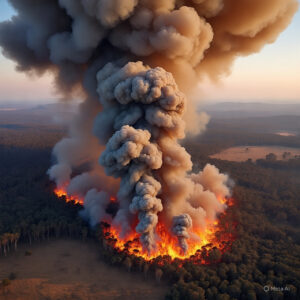
Regional Impact of Southern Hemisphere Wildfires and Heatwave
The impact of this extreme weather event is devastatingly widespread across the Southern Hemisphere.
| Region | Alert Level | Max Wind (km/h) | Max Rainfall (mm) | Notes |
| :—————– | :———- | :————– | :—————- | :——————————————————————————————————————————- |
| Australia | Extreme | 90 | 10 | Record temperatures exceeding 45°C in New South Wales and Victoria. Widespread bushfires, evacuations, and public health alerts. |
| South America | Extreme | 100 | 5 | Catastrophic wildfires in Argentina (Patagonia) and Chile. 21 deaths reported in Chilean coastal communities. |
| South Africa | Extreme | 85 | 8 | Worst wildfire season in a decade. Affecting tourist destinations and wildlife. |
| New Zealand | High | 120 | 150 | While not directly experiencing wildfires, severe weather, including heavy rain and strong winds, is causing flooding and slips. |
| Parts of Southern Africa | High | 70 | 12 | Expanding drought conditions in Angola, abnormal dryness in Tanzania and DRC. Flooding reported in Mozambique and Malawi. |
The wildfires are not only consuming vast tracts of land but also consuming resources and lives. In Chile, 21 people have tragically died in coastal communities due to heat and wildfires.
## Infrastructure & Economic Damage from Southern Hemisphere Wildfires
The economic and infrastructural toll of the Southern Hemisphere wildfires and heatwave is immense and continues to mount. Power grids are struggling to cope with surging demand for cooling systems, leading to potential blackouts. In Australia, the bushfires threaten agricultural productivity, with prolonged drought and dry vegetation acting as tinderboxes. Farmers are expressing concern about irrigation shortages and crop stress in South America, further impacting food security. Transport networks are disrupted by both the heat and the fires, hindering emergency response efforts and the movement of goods. The tourism sector in South Africa, particularly in areas like Mossel Bay and Franschhoek, is also experiencing adverse effects. The financial repercussions will be felt for years to come, with rebuilding and recovery efforts requiring significant investment.
[IMAGE PLACEHOLDER: Destroyed homes and charred landscapes after a wildfire.]
## What Experts are Saying About the Southern Hemisphere Wildfires
Meteorologists and climate scientists are issuing urgent warnings about the severity and frequency of these extreme events. Dr. Adam Scaife, head of long-range predictions at the UK’s National Weather and Climate Service, states that 2026 is forecast to be approximately 1.46 degrees Celsius above pre-industrial levels, making it the fourth consecutive year exceeding the 1.4 degrees Celsius mark. He notes that a significant El Niño developing quickly could still make 2026 a record-breaking warm year. Meteorologist Carolina Vera from the Center for Ocean and Atmospheric Research at the University of Buenos Aires highlights how climate change is altering natural fire dynamics, turning manageable fires into uncontrollable events. “The conditions that cause the most extreme fires to occur—hot, dry, and windy—are intensifying and becoming more common,” warns another expert. The World Meteorological Organization (WMO) has already reported the last three years as the warmest ever recorded, underscoring the long-term trend.
## 72-Hour Survival Forecast for Southern Hemisphere Wildfire Impacted Regions
The immediate forecast offers little respite for the regions most affected by the Southern Hemisphere wildfires and heatwave. Current projections indicate that the extreme heat and dry conditions will persist over the next 72 hours.
**February 14, 2026 (Today):** Continued high temperatures across Australia, South America, and South Africa, with ongoing fire activity. Severe weather, including heavy rain and wind, is impacting New Zealand.
**February 15, 2026:** The heatwave is expected to continue unabated in the hardest-hit regions. Firefighting efforts will remain critical. New Zealand will continue to experience significant rainfall and wind.
**February 16, 2026:** A slight moderation in temperatures might be observed in some localized areas, but the overall severe conditions are likely to persist. The risk of new ignitions remains high due to dry vegetation and extreme heat.
**Safety Precautions:** Residents in affected areas must **stay informed** about local emergency services’ directives, **have an evacuation plan**, and **reduce outdoor activities** during the hottest parts of the day. **Ensure adequate hydration** and take measures to protect homes from embers if fires are nearby.
[IMAGE PLACEHOLDER: Map showing fire perimeters and extreme heat zones across the Southern Hemisphere.]
## The 30-Day Climate Outlook for the Southern Hemisphere
Looking ahead, the 30-day climate outlook for the Southern Hemisphere suggests a continuation of the volatile weather patterns. The possibility of an El Niño developing further amplifies the risk of sustained high temperatures and increased wildfire potential. While La Niña typically brings cooler conditions, the current trend suggests a significant departure from typical patterns. Climate researchers emphasize that global warming is magnifying these natural cycles, leading to more frequent and intense extreme weather events. This means that even if El Niño conditions do not fully materialize, the baseline for extreme heat and fire risk remains elevated. The long-term outlook is concerning, with projections indicating that these extreme conditions may become the new normal if global emissions are not drastically reduced.
## Conclusion: A Dire Safety Verdict for the Southern Hemisphere
The Southern Hemisphere is currently facing an unprecedented meteorological crisis driven by extreme heat and widespread wildfires. The scale of destruction, loss of life, and economic damage is staggering. The confluence of atmospheric blocking, elevated sea surface temperatures, and the backdrop of global warming has created a perfect storm for catastrophic fire weather.
**The immediate safety verdict for affected regions is dire.** Residents are urged to heed all warnings from emergency services, prioritize evacuation if instructed, and take all necessary precautions to stay safe. The long-term implications for climate resilience and global weather patterns are profound. This event serves as a critical reminder of the escalating climate emergency and the urgent need for global action to mitigate its most devastating impacts. The **Southern Hemisphere Wildfires February 2026** are a clear and present danger that demands immediate international attention and robust adaptation strategies.